
6 Ways to Remember You Are More Than Your Diagnosis
Sep 03, 2026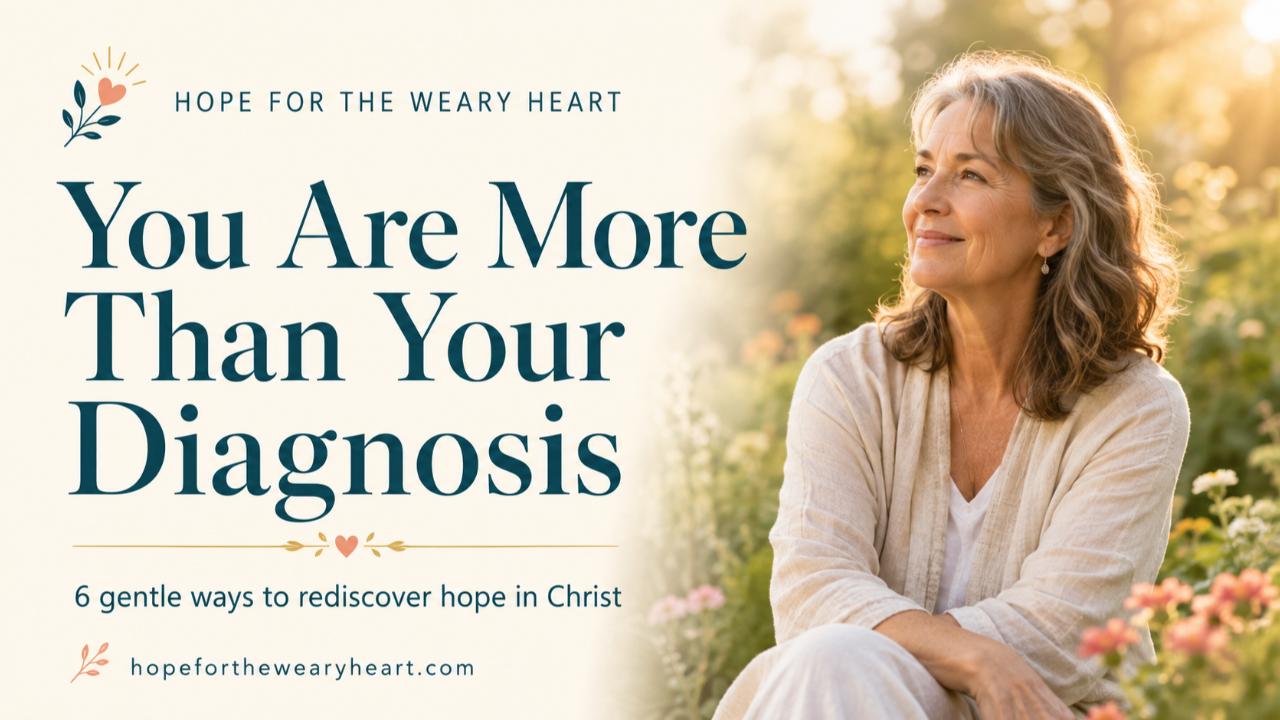
6 Ways to Remember You Are More Than Your Diagnosis
Sometimes a diagnosis changes more than your calendar. It changes the way you see yourself.
You begin organizing your days around appointments, medications, energy levels, and what your body can manage. Somewhere along the way, you may start wondering:
Where did I go? Am I still the woman I used to be? What do I have left to offer?
If you have asked those questions, I understand.
When doctors diagnosed me with rheumatoid arthritis, I began a journey through many treatments, questions, and adjustments. There were days when the symptoms demanded so much attention that it was difficult to think about anything else.
Over time, I began learning something I still need to remember:
The diagnosis affects my life, but it does not tell the whole story of who I am.
And sweet friend, the same is true for you.
Your pain deserves care. Your limitations deserve understanding. But you are also a woman with a history, a personality, relationships, gifts, and a place in God’s heart that illness cannot take away.
Here are six gentle ways to begin seeing yourself more fully again.
1. Let Your Identity in Christ Speak Louder Than Your Diagnosis
A diagnosis can help explain what is happening in your body. It cannot measure your worth or describe everything God sees in you.
You are still His beloved daughter. You are still someone He knows intimately and loves completely.
Accepting that you have an illness does not mean surrendering your identity to it. You can be honest about your health and remain rooted in who you are in Christ.
Ephesians 2:10 reminds us that we are God’s workmanship. That remains true on the days when you feel capable and on the days when getting dressed takes most of your energy.
Try completing this sentence:
“I am living with __________, and I am also __________.”
Perhaps you are also a mother, a friend, a storyteller, a woman who notices when someone feels left out, or someone who loves music and makes others laugh.
Give those parts of yourself room to be seen.
2. Make Room for Conversations Beyond Illness
When I was first diagnosed, I joined support groups because I wanted understanding. There is comfort in talking with people who know what it is like to live with pain and uncertainty.
We need places where we can speak honestly without explaining or defending ourselves.
But I also discovered that I needed conversations about other parts of life. I needed laughter, shared interests, and reminders that there was still a world beyond managing symptoms.
You do not need to stop talking about your illness. You deserve relationships where both your struggles and your interests have room.
You might gently say:
“Thank you for asking how I’m feeling. It has been a hard week, but I would love to hear what’s happening in your life, too.”
Or:
“Could we talk about something enjoyable for a little while? I could use that today.”
Let someone know what you are reading, remembering, creating, or looking forward to. Those things matter, too.
3. Picture a Meaningful Life in the Body You Have Today
It can be painful to remember what your body once did with ease.
I have pictured myself walking, running, and cycling—activities connected to a sense of freedom and possibility. But hope also needs room for the body and circumstances I have today.
You do not have to imagine yourself symptom-free before you can imagine something good.
Perhaps a meaningful moment looks like sitting outside in the sunshine, enjoying a short visit, creating something with your hands, or listening to worship music while you rest.
Ask yourself:
“What is one thing that could help me feel more like myself today?”
Let the answer be small enough to fit your actual capacity.
Philippians 4:13 reminds me that Christ strengthens us in the circumstances we face. His strength can help us take a step, adapt a plan, ask for help, or accept the rest we need.
Rest is not a failure of faith. Your worth does not rise and fall with your physical ability.
4. Stay Connected Through Small Acts of Love
Managing a chronic illness takes attention. Thinking about appointments, symptoms, and treatments does not make you selfish. It means you have real responsibilities and needs.
Still, when you have the capacity, reaching toward someone else can remind you that connection remains possible.
You might send a thoughtful message, pray for a friend, thank someone who has helped you, or listen when a loved one needs encouragement.
These acts do not have to be impressive to be meaningful.
And on the days when you have little to give, you are still worthy of receiving love.
You do not have to be useful to deserve care.
Sometimes connection means offering encouragement. Sometimes it means letting someone sit beside you while you struggle. Both belong in a life of faith and love.
5. Choose Words That Leave Room for Hope
The way we speak to ourselves matters, especially when we are already weary.
Notice when a difficult moment becomes a harsh conclusion:
“I am useless.”
“I have nothing left to offer.”
“I am only a burden.”
Those statements reach far beyond describing pain. They pass judgment on your entire person.
Try words that make room for both honesty and compassion:
- “Today is difficult, and I still have worth.”
- “My capacity has changed, and my gifts still matter.”
- “I need help right now, and I am allowed to receive it.”
- “I do not know what tomorrow holds, but I can ask God to meet me here.”
You do not need to police every phrase. Saying “my arthritis” or “my pain” does not mean you caused your illness or have agreed to remain sick.
The invitation is to speak to yourself with the tenderness you would offer another weary woman.
6. Let Scripture Become a Place of Rest
During my journey, God’s Word became a place I returned to for hope.
Sometimes I came with confidence. Other times, I came exhausted, with more questions than answers.
You can come that way, too.
You do not have to turn every Scripture into a test of whether you believe strongly enough. Begin by letting it remind you of God’s character and His presence.
Consider reading:
- Psalm 34:18: A reminder of God’s nearness to the brokenhearted.
- Matthew 11:28–30: Jesus’ invitation to the weary to come to Him for rest.
- Romans 8:38–39: The assurance that nothing can separate us from God’s love in Christ.
- Ephesians 2:10: A reminder that we are His workmanship.
Choose one passage. Read it slowly. Tell God what feels difficult to believe and where you need His comfort.
Prayer, Scripture, medical care, counseling, and practical support can all have a place in your life. Continuing to need treatment does not mean your faith has failed.
You Are Still You
Perhaps your life looks different from what you expected. Perhaps you are still grieving what illness has changed.
You do not have to rush that grief or pretend you are doing better than you are.
But even here, you are more than a list of symptoms.
You are a woman who can be known, loved, supported, and included. Your story still contains more than suffering. Your relationship with God still has room for questions, comfort, and hope.
Today, you do not need to reclaim every part of your life.
Start with one small reminder:
“This diagnosis is part of my story. I am still God’s beloved daughter, and there is more to me.”
A Prayer for the Woman Who Feels Defined by Illness
Heavenly Father,
You know how much this illness has changed my life. You see the pain, the uncertainty, and the parts of myself I miss.
Help me remember who I am in Your love. Give me grace to care for my body without judging myself for its limitations. Bring people who can hear my struggles and also see my gifts, my heart, and my whole story.
Show me one small way to welcome connection or joy today. When hope feels far away, help me rest in Your presence.
In Jesus’ name, amen.
A Gentle Next Step
What is one part of yourself you would like to reconnect with—a gift, an interest, a relationship, or a simple joy?
Write it down. Then choose one manageable way to make room for it this week.
You Don’t Have to Walk This Journey Alone
If you are longing for gentle encouragement grounded in God’s Word, I would love to walk alongside you.
Don't worry, your information will not be shared.
We hate SPAM. We will never sell your information, for any reason.